“He won’t eat, but he’s starving. I’m terrified he’s not getting the nutrients he needs,” Emily Simpson tearfully shared during the Real Housewives of Orange County Season 19 premiere, revealing her son Luke’s diagnosis of avoidant/restrictive food intake disorder (ARFID).
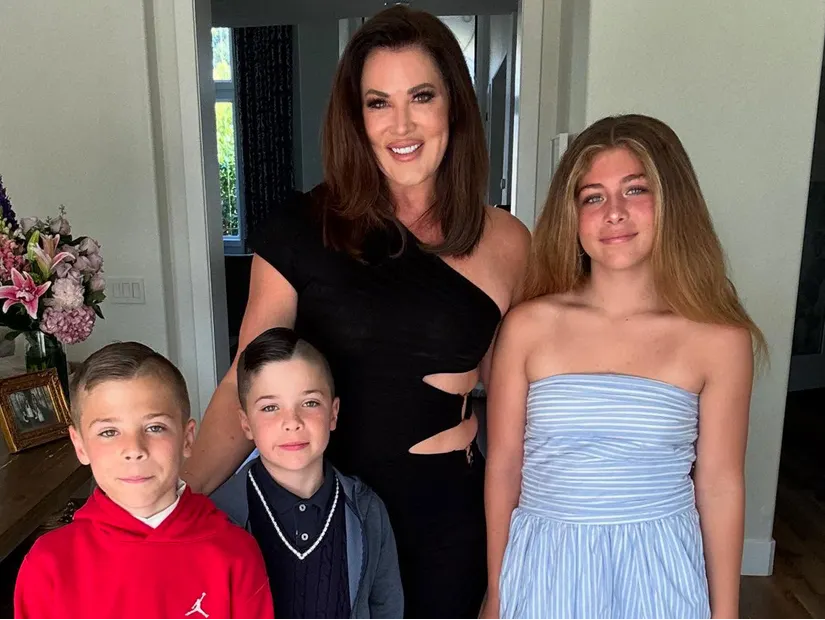
The Bravo star, 49, is speaking out about her young son’s struggle with the little-known eating disorder, which has left him unable to consume enough food despite feeling hunger. Emily—who shares Luke, his twin Keller, and daughter Annabelle with husband Shane—explained that ARFID differs from typical eating disorders because it isn’t driven by body image concerns but rather by extreme food aversion.
According to the Cleveland Clinic, ARFID—most common in children—causes severe limitations in food intake due to sensory sensitivities, fear of eating, or lack of interest in food. For Luke, even the smell or texture of meals can trigger intense discomfort.
“He used to be picky, but over the past year, he’s stopped eating almost entirely,” Emily admitted in a confessional. “His therapist confirmed it’s ARFID—he doesn’t recognize hunger cues, and most foods repulse him.”
She recalled a heartbreaking conversation with Luke’s nutritionist: “She asked if he’s sensitive to smells, and I said, ‘Absolutely.’ We’ll walk into someone’s house, and he’ll blurt out, ‘It stinks in here.’ But it’s not rudeness—his brain processes smells and textures differently.”
The disorder has taken a toll on Luke’s energy and mood, yet he struggles to connect his irritability to his lack of nutrition. “He’ll say, ‘Mom, I’m starving,’ but when I offer food, he refuses,” Emily said, fighting back tears. “I’m scared he’ll be labeled ‘the weird kid’ at school. I just want him to be happy.”
Later in the episode, Emily confided in co-star Gina Kirschenheiter about another potential diagnosis: autism. “His therapist said ARFID often overlaps with autism,” she explained. “He needs specialized testing to understand where he falls on the spectrum.”
Overwhelmed with guilt, Emily questioned whether she had missed earlier signs. “Loud noises, textures, smells—they all bother him. Did I ignore the red flags?” Gina, whose daughter has sensory processing disorder, offered support: “I’ve been there. The self-doubt is crushing, but Emily is an amazing mom.”
In a touching confessional, Gina added, “Watching her go through this is heartbreaking. She blames herself, but she’s doing everything right.”